 Zen
ZenRelaxation Techniques During Pregnancy: What Actually Calms You Down
Relaxation techniques for pregnancy that go beyond 'just breathe.' Practical methods for anxiety, insomnia, and the emotional weight of carrying a baby.
200,000+ moms • ORCHA Certified • Free on iOS & Android
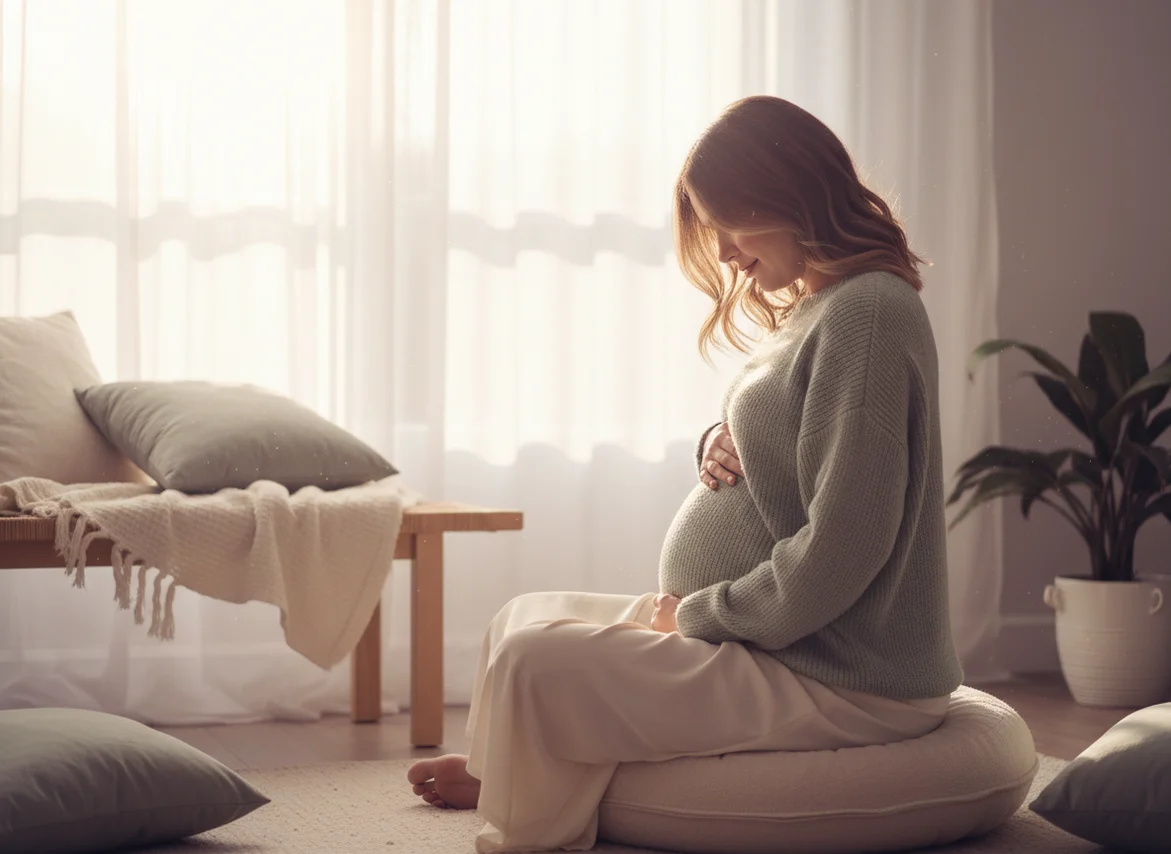
Why Pregnancy Relaxation Matters for Stress and Anxiety
Pregnancy relaxation matters because stress is not only a thought pattern; it is a body state. When anxiety rises, your breathing may become shallow, your jaw and pelvic floor may tighten, your heart may race, and your mind may start scanning for danger.
That does not mean you are doing pregnancy wrong. Many people feel fear alongside excitement, especially before scans, after a previous loss, during the third trimester, or when birth feels unpredictable. Relaxation practices give your nervous system a repeated signal of safety. Studies suggest that relaxation, mindfulness, and breathing practices can reduce perceived stress and anxiety in pregnancy, though results vary by person and practice length. If symptoms feel intense or persistent, speak with your midwife, OB-GYN, or mental health professional.
How Pregnancy Relaxation Techniques Work in the Body
Pregnancy relaxation techniques work by shifting the body away from sympathetic fight-or-flight activation and toward parasympathetic regulation, often called the rest-and-digest state. The most useful tools slow the exhale, release muscle guarding, focus attention, and create a felt sense of safety.
During pregnancy, this matters because adrenaline can make the body feel braced, while steadier breathing and softer muscles may support calmer sleep, digestion, and emotional regulation. In labor, calm is not a guarantee of an easy birth, but it can help you work with contractions instead of tensing against every sensation. Research on mindfulness and relaxation in pregnancy suggests benefits for stress, anxiety, and some physical markers, but this is not medical advice. Always consult your healthcare provider for symptoms or high-risk concerns.
How to Practice Prenatal Relaxation Daily
A good prenatal relaxation routine should take 5 to 15 minutes and feel almost too simple. Consistency usually matters more than doing a long session once in a while.
- Choose one cue: link practice to brushing your teeth, lying down after lunch, or getting into bed.
- Start with the exhale: breathe in gently for 3 or 4 counts, then out for 5 or 6 counts.
- Release one area: soften your jaw, shoulders, hands, belly, or pelvic floor.
- Add a focus: use a phrase such as “I am safe in this moment” or picture a place that feels calm.
- Stop if it feels wrong: dizziness, distress, pain, or reduced fetal movement should be discussed with your healthcare provider.
Breathing Exercises for Pregnancy Calm
Breathing exercises are often the fastest relaxation tool because the breath is directly connected to the autonomic nervous system. The safest starting point for most pregnant people is a soft inhale and a longer, unforced exhale.
Try 4–6 breathing: inhale through the nose for 4 counts, then exhale through the mouth for 6 counts. Repeat for 2 minutes, keeping the shoulders low and the belly comfortable. If counting makes you tense, simply think “easy in, slower out.” Avoid breath-holding or intense breathwork unless your clinician has cleared it. For more structured practice, you can learn breathing techniques for pregnancy that fit daily anxiety, active labor, and the pushing stage without promising a specific birth outcome.
Progressive Muscle Relaxation for Pregnancy Tension
Progressive muscle relaxation, or PMR, helps pregnancy tension by teaching your body the difference between gripping and letting go. It can be especially useful when anxiety feels physical: tight chest, clenched hands, raised shoulders, or a jaw that will not soften.
Start at your feet and gently tense one area for 3 to 5 seconds, then release for 8 to 10 seconds. Move through calves, thighs, hands, arms, shoulders, face, and pelvic floor if that feels comfortable. Keep the tensing mild, never forceful. PMR is not about performance; it is about noticing relief. If relaxation brings up panic, trauma memories, or fear of losing control, pause and seek support from a qualified perinatal mental health professional.
Guided Meditation During Pregnancy for Busy Minds
Guided meditation during pregnancy is helpful when silence makes your mind louder. A calm voice, simple body cues, and short prompts can give your attention somewhere safe to land when worry keeps circling.
Many people start with 5 minutes in the first trimester, 10 minutes in the second, and bedtime or birth-prep tracks in the third. Meditation is not about clearing every thought; it is about returning gently when your mind wanders. If you are new to it, this guide on how to meditate during pregnancy explains simple positions, timing, and realistic expectations. For evidence context, see this overview of pregnancy meditation benefits and research.
Visualization and Birth Affirmations for Confidence
Visualization and affirmations can reduce fear by giving the brain a rehearsed image of coping. They do not control birth, but they can help you feel less helpless when thinking about contractions, medical decisions, or the unknown.
Try imagining one contraction as a wave: it builds, peaks, and passes. Pair it with a phrase such as “One breath at a time” or “My body and my baby are working together.” Keep affirmations believable; your nervous system usually trusts grounded language more than forced positivity. If fear of birth is strong, combine visualization with education, your birth team’s guidance, and support for trauma or previous difficult experiences. You can also explore positive birth affirmations that are calm, practical, and inclusive of hospital, home, and birth center plans.
Trimester-Specific Relaxation Support
The best relaxation support often changes by trimester because your body, fears, and sleep patterns change. First trimester calm may focus on nausea, uncertainty, and early-scan anxiety; third trimester calm often focuses on discomfort, insomnia, and birth preparation.
In the first trimester, short breathing practices and grounding exercises may be easier than long meditations, especially if nausea is high. If early worry is taking over, these first trimester anxiety tips can help you sort normal worry from signs you need extra support. In the second trimester, gentle movement, PMR, and meditation may feel more accessible. In the third trimester, side-lying relaxation, birth visualization, and sleep meditations can help you rest while preparing for labor without assuming one “perfect” birth plan.
Sleep Relaxation for Pregnant Women
Sleep relaxation for pregnant women should focus on lowering stimulation, easing body discomfort, and reducing the mental “review of everything” that often appears at night. A predictable routine trains the brain to expect rest.
Try dimming lights 45 minutes before bed, placing pillows before you are exhausted, and playing a 10-minute body scan or slow breathing track. If you wake at 2 a.m., avoid arguing with yourself about sleep; return to one cue, such as softening your hands or lengthening your exhale. For a fuller routine, see sleep meditation for pregnant women or this practical pregnancy bedtime routine. Severe insomnia, snoring with breathing pauses, or mood changes deserve medical advice.
Quick Panic Relief Techniques in Pregnancy
Quick panic relief in pregnancy should interrupt the spiral without forcing you to “calm down.” Panic often eases faster when you orient to the present moment and make the body feel less trapped.
Use the 5–4–3–2–1 method: name 5 things you see, 4 things you feel, 3 things you hear, 2 things you smell, and 1 thing you can taste. Then place one hand on your chest and one on your bump or ribs, breathing out slowly. Cold water on the wrists or a short walk across the room can also help discharge adrenaline. If panic attacks are recurrent, frightening, or linked with thoughts of harm, contact your healthcare provider promptly. You deserve support, not just coping tips.
Pregnancy Anxiety Relief Tools Compared
Pregnancy anxiety relief tools vary in how specific they are to birth, sleep, and trimester-related worries. A general meditation app may help with everyday stress, while a pregnancy-focused tool can include bump-safe positioning cues, birth affirmations, and labor breathing language.
| Option | Best for | Pregnancy-specific? | Notes |
|---|---|---|---|
| Zen Pregnancy | Meditation, hypnobirthing, breathing, affirmations | Yes | Built around pregnancy and birth preparation |
| Calm | General sleep and stress | Limited | Strong general relaxation library |
| Headspace | General mindfulness skills | Limited | Helpful for beginners learning meditation basics |
| Expectful | Fertility, pregnancy, postpartum support | Yes | Pregnancy and motherhood-focused content |
Using a Pregnancy Relaxation App Safely
A pregnancy relaxation app is safest when it supports your care plan rather than replacing it. Use guided audio for daily practice, sleep, birth confidence, and emotional steadiness, while taking medical concerns to your clinician.
Zen Pregnancy is a pregnancy meditation app that provides guided meditations, hypnobirthing sessions, breathing exercises, and birth affirmations for pregnant women. If you want audio support tonight, the iOS pregnancy relaxation app and Android guided pregnancy meditations can help you practice without planning a routine from scratch. For anxiety-specific support, you may also find pregnancy anxiety relief meditation useful. This is not medical advice; consult your healthcare provider for health symptoms, medication questions, or mental health concerns.
Limitations and Safety for Prenatal Relaxation
Prenatal relaxation is supportive, but it has limits. It can reduce stress and improve coping for many people, yet it cannot diagnose symptoms, prevent complications, or guarantee a calm, unmedicated, or pain-free birth.
- Do not use meditation or breathing exercises instead of urgent care for bleeding, severe pain, reduced fetal movement, severe headache, chest pain, or signs of preterm labor.
- Avoid intense breath-holding, hyperventilation practices, overheating, or positions that make you dizzy or short of breath.
- Relaxation may bring up trauma memories; stop and seek trauma-informed perinatal support if you feel unsafe.
- Persistent anxiety, depression, intrusive thoughts, or panic deserve professional care. The ACOG guidance on mental health in pregnancy and postpartum supports screening and treatment.
When Relaxation Becomes Birth Preparation
Relaxation becomes birth preparation when you practice it before labor, not only during labor. Repetition helps your body recognize familiar cues: a longer exhale, a softened jaw, a steady phrase, or an image of a contraction passing like a wave.
This does not mean you must choose a specific kind of birth. These skills can support a planned cesarean, induction, epidural, unmedicated labor, home birth, birth center birth, or hospital birth. Hypnobirthing uses many of the same principles: calm conditioning, guided imagery, breath awareness, and fear reduction. If you are curious about that approach, start with hypnosis for pregnancy or labor-focused support such as guided meditation for labor.
Frequently Asked Questions
What relaxes anxiety while pregnant?
Slow exhale breathing, progressive muscle relaxation, grounding, guided meditation, and gentle movement can reduce the body’s stress response. If anxiety feels constant, severe, or scary, consult your healthcare provider.
Is meditation safe during pregnancy?
Meditation is generally safe for many pregnant people when it is gentle and comfortable. It should not replace medical care, therapy, medication, or urgent assessment when symptoms need professional support.
Can breathing exercises affect my baby?
Gentle breathing may help lower your stress response, which can support overall wellbeing. Avoid breath-holding, hyperventilation, or intense breathwork unless your healthcare provider says it is safe for you.
How long should I practice daily?
Five to fifteen minutes daily is enough for many people to notice a shift over time. Short, regular practice usually works better than occasional long sessions.
What helps panic attacks in pregnancy?
Try grounding with your senses, lengthening your exhale, cooling your wrists, and orienting to the room around you. Repeated panic attacks should be discussed with a clinician or perinatal mental health professional.
Can relaxation help during labor?
Relaxation can help you soften tension, focus your breathing, and cope with contractions, but it cannot guarantee a specific birth outcome. It works best when practiced before labor begins.
What if meditation makes me anxious?
Stop the session and try eyes-open grounding, gentle movement, or a shorter guided practice. If stillness brings up trauma or panic, seek trauma-informed pregnancy support.
Which trimester should I start?
You can start in any trimester. First trimester practice may focus on anxiety and nausea, while third trimester practice often focuses on sleep, comfort, and birth confidence.
When should I seek professional help?
Seek help if anxiety, depression, panic, intrusive thoughts, or insomnia interfere with daily life, or if you have thoughts of harming yourself or someone else. Contact your healthcare provider, local emergency service, or crisis support immediately if safety is a concern.